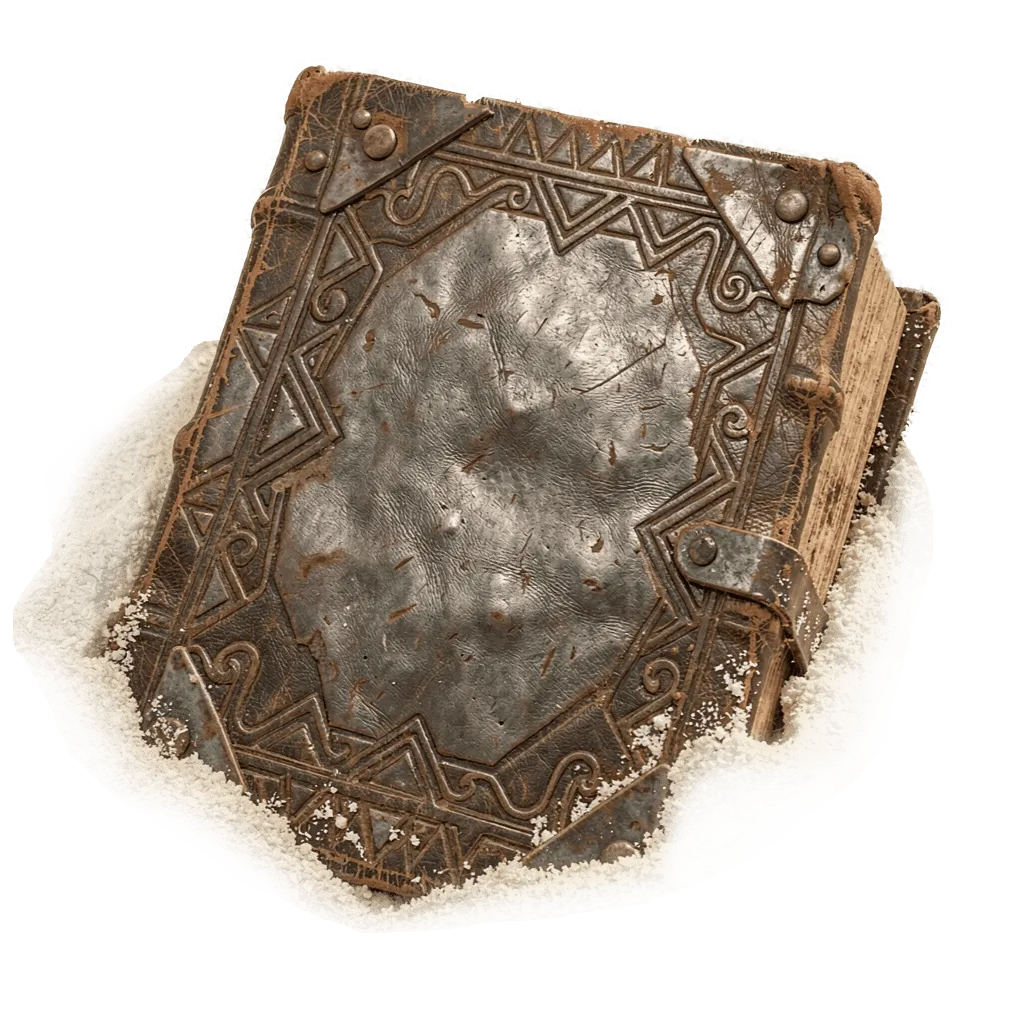
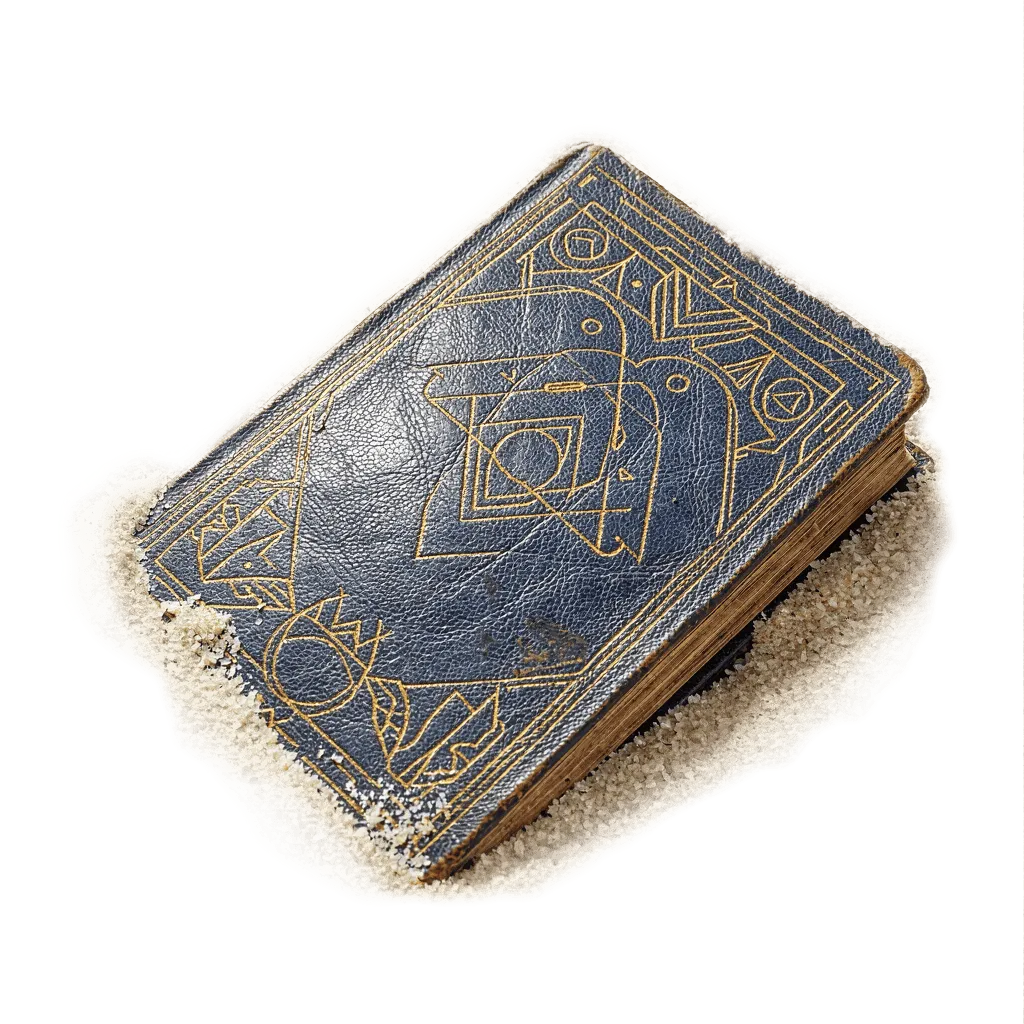


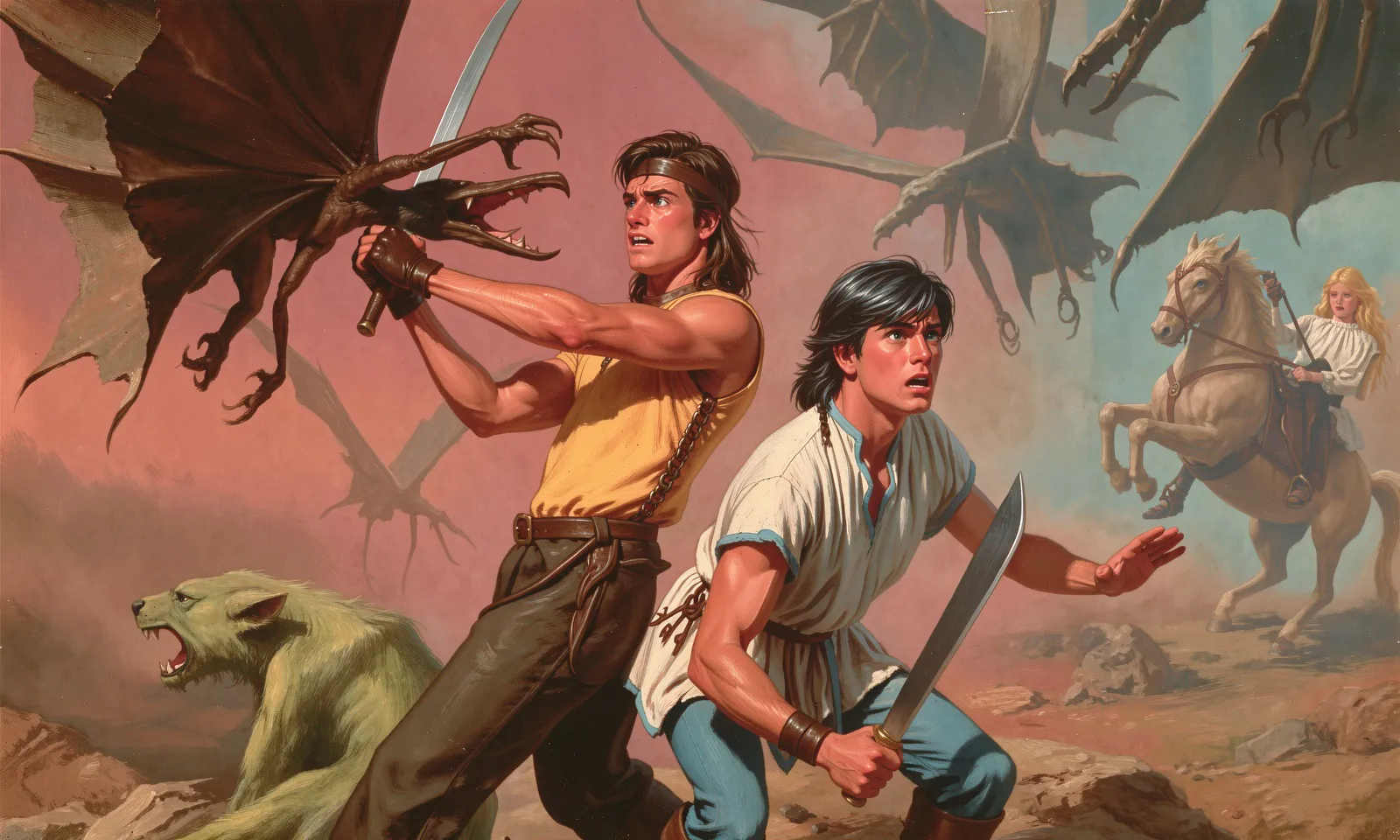
Seven sorcerers each hold one key, and each key keeps its holder alive for ever. Hand over the key and you hand over eternity with it. In Geraldine Harris’s Seven Citadels, the pampered favourite son of an emperor has to ask all seven of them for theirs, while having nothing obvious to offer in return.
I have read a good many contracts and offers in my time, and I have never seen a more difficult one put on a table.
Most fantasy quests are shopping lists. The hero sets out to collect the sword, the ring or the seven shards of the something, and the items on the list wait patiently to be picked up; critics call them plot coupons, because the hero gathers them and cashes them in for an ending. Harris’s coupons are alive: they have names and reasons of their own, and every one of them would much rather not be collected.
Geraldine Harris is an English Egyptologist, born in 1951, who publishes her books on Egyptian mythology under the name Geraldine Pinch. Under the Harris name she wrote the four Seven Citadels novels, Prince of the Godborn, The Children of the Wind, The Dead Kingdom and The Seventh Gate, which came out in 1982 and 1983.
The books were aimed at young readers, and Marie Brennan, the American novelist best known for A Natural History of Dragons, loved them as a child. When she came back to them in 2023, however, she found “no real sense of this being ‘a story for kids,’ except insofar as that’s who it got marketed to.”
That is because the books ask of their reader what the quest asks of its hero: to sit across the table from somebody with every reason to refuse, and to understand why. Brennan puts her finger on it, too: a key that keeps its owner immortal “adds a whole moral dimension to the quest that is usually absent from Plot Coupon stories.”
The errand
“Galkis was doomed,” the jacket of the first book begins. “It was attacked by enemy armies without and torn by intrigues within.”
Galkis is an empire in an invented world called Zindar, ruled by the Godborn: the Emperor’s family, each of them “a true descendant of Zeldin”, its god. With Galkis failing, there is one hope left. Legend says that a Saviour lies imprisoned behind seven gates, and that the keys to those gates are held by seven sorcerers whom nobody knows how to find. The High Priest concludes that there is only one person he can send to look for them: Kerish-lo-Taan, the Emperor’s third son, “who was Godborn. But, though Kerish possessed many strange powers, his father had forbidden him to be taught their use.”
An objection is raised at once, for the Godborn are forbidden to leave Galkis. Kerish goes anyway, along with his half-brother Forollkin, who has the Emperor’s blood but was never formally acknowledged by him, and who is everything Kerish is not: a soldier, practical, stalwart, charming, and in charge of his temper.
So the boy has the rank and the strange powers, the brother has the sword arm, and the quest turns out to have very little use for either. None of the seven keys calls for a battle, which is fortunate, since Kerish is not much use in one. Nor is he much use at humility. “The seas will quench the stars before the Godborn are humble,” says one character in the first book, “and Kerish-lo-Taan is the worst of them all.”
He is, in other words, a brat, and a brat is exactly the right person to send, because a hero who sets out humble has nowhere to go. Kerish has seven keys’ worth of growing up to do, and Harris makes him pay for every one of them in something other than blood.
What do you offer a man who has for ever?
Not gold, which an immortal has had all the time in the world to collect, and not threats, which are a poor way to ask anybody for the thing that keeps him alive. What is left is understanding: to win a key, Kerish has to see the sorcerer holding it more clearly than the sorcerer sees himself.
He starts badly placed to do it. The first sorcerer is Elmandis of Ellerinonn, and the brothers go to him expecting a tyrant, since that is his reputation, but find a philosopher-king whose people depend on him. The jacket puts it exactly: he “is more dangerous than he seems because he is good.” Asking for his key means asking a good ruler to start dying, and asking his city to let him. If this is a children’s book, it is a rather heavy one, right out of the gate.
Before Kerish can ask for that, however, he has to ask for something else. When they reach the citadel, he “has to swallow his pride and beg the Sorcerer to heal his brother.” That is the first price a prince of the Godborn pays on this quest, and he pays it for Forollkin. Only afterwards does he face “a grim ordeal” and bring “all his powers of argument” to persuade the noble Elmandis to give the first key up.
Already, then, the usual quest has been turned on its head: before it asks anybody for a key, it asks its hero for his pride.
The second key is the one I would show anybody who still thinks kindness is a soft subject.
Its holder is Ellandellore, the estranged younger brother of Elmandis, who rules Cheransee, the Isle of Illusions. He is “a crazed child who cannot be persuaded by reason to give up the key that has trapped him in eternal childhood.” So Kerish does not reason with him. He “plays a nightmare game with Ellandellore to trick him out of his key and barely escapes with his life.”
I was a pickpocket once and know a lift when I read one, but I had never before come across one that does the mark good. With the key gone, “Elmandis can now help his brother to grow up at last.” The immortality Kerish takes off him was the very thing that kept a boy from ever becoming a man, so the trick that moves an empire one key closer to rescue also gives a lost child back the rest of his life. It is not even the most thrilling key in the quartet, and I will leave you to discover which one is.
Cleverness, with a conscience
It does not always go that cleanly, and Harris makes the most of the mess. Brennan notes that while Kerish gets some keys “by having a rational conversation with the holder”, “others require deceit or manipulation in ways that leave him wracked with guilt.”
And this is precisely the detail that made me trust these books. Harris hands her prince every excuse a schemer could want, an empire under siege and a Saviour waiting behind a locked door, and then makes him feel each deception anyway, which is the difference between a clever hero and a crook with a good cause.
It does something to the reader, too. Every sorcerer has a reason for holding on, and Harris makes sure you hear it, so you spend four books wanting Kerish to succeed and dreading what his success will cost the person who helps him. I can think of very few quests that make you feel sorry for the obstacle, and fewer still that make you feel it seven times over.
The bargains grow harder as they go. Sendaaka, the sorceress of Tir-Zulmar, a citadel built on the edge of the Ultimate Mountains, parts with her key only on a condition, and it must be handed back if the condition cannot be met. Kerish asks for it with a nerve I can only admire: “Lady Sendaaka, if I am worthy to wear two keys, might I not be worthy to wear three?” “You have courage and clear sight,” she answers gently, and her next question is whether he has the strength to go with them.
Late in the quest Kerish wins a key by showing its sorcerer “that in spite of his immortality he can never achieve his ambition”. That is a very fine piece of salesmanship in a book sold to children, because Kerish does not outbid eternity; he shows the man holding it that eternity will never buy him what he actually wants.
Kerish does not outbid eternity; he shows the man holding it that eternity will never buy him what he actually wants.
The company he keeps
Elmandis sends the brothers on with a third traveller, Gidjabolgo of Forgin, a musician the jacket of the second book calls “hideous” and “insolent”, which is how nearly everybody in the books sees him, and rather kinder than he is to anybody else. He says the unkind thing, usually first and usually loudest. He is the sour voice the quest needs, the one who never lets a prince of the Godborn believe his own legend, and he is the main reason the kindness in these books never turns sweet.
The kindness is real, all the same. In one scene Kerish steps into the role of Zeldin, the god of his own house, for a company of actors, and gives their chief actor a moment of the divine he has only ever pretended to. The boy who was raised to be worshipped has learned to hand his godhead to somebody else, and the whole arc of the quartet is in that one small scene.
Harris is as unsentimental about magic as she is about kindness, and James Davis Nicoll, a Canadian critic of science fiction and fantasy, caught it exactly. In Zindar, he wrote, “the main difference magic makes is that it enables one to make mistakes on a far greater scale”. That goes some way to explaining why a boy with strange powers he was never taught to use spends four books winning with his head instead.
A series that ends
There is one more reason to pick these books up, and as somebody who reads contracts for a living I rate it highly: they are a very well planned and intentional body of work.
Dave Langford, the British critic who reviewed fantasy for White Dwarf, the Games Workshop magazine, noticed it in 1985, reviewing the third book. “Evidently she planned the four books as a whole rather than writing blindly into the unknown or tacking extensions onto a self-contained novel,” he wrote. “To all sequelholics I say, go thou and do likewise.”
Harris published four books in two years, planned from the first page to the last, and the fourth one ends it. This paper has written before about what it is like to wait fifteen years for a final volume; Seven Citadels will not make you wait at all. Four short books, a beginning, a middle and an ending, all of it finished more than forty years ago.
How it ends
I will not tell you, except to say that the last book asks more of Kerish than any of the seven keys did. Langford said only that its finale pushes “fantasy clichés beyond their limits into a kind of realism”, and summed it up as “nifty stuff”. I can do no better than that without giving it away.
How you can read it
If you can’t find physical copies of the books and want to enter the world, the easiest way might be in audiobook format, and luckily all four books are available. Read by James McLeod, a fantasy author whose The Torril City Mysterion was reviewed by this paper back in August, they each run to seven or eight hours.
According to McLeod, who recorded them in 2020, it took almost a year and he performed more than fifty voices in the process. The recordings then sat for more than two years before the first went on sale in 2023, so the question is, who commissions twenty-nine hours of narration and waits that long to sell a minute of it?
The answer is: somebody who wants rather more than an audiobook. In an article on McLeod’s own news page, he states that the series’ rights “were recently acquired by a film producer in Los Angeles who contacted me for the narration,” and the credits on the recordings indeed name Michelle Clay, a film editor and producer in Los Angeles. A website called Seven Citadels Films describes her as a filmmaker and dreamer and quotes her plainly: “I have loved these books from the moment I finished the first read. I have been dreaming of adapting these great works to films most of my adult life.” Harris’s own site adds that the quartet “is currently being developed into a series of films”.
That is exciting news, for fantasy adaptations are always welcome, but as yet, I can find no studio, no cast, no date and no word of it in the trade press, and in the film business, development can last a very long time. Whatever comes of it, this much is already on the record: one reader loved a series enough to have it fully narrated.
The first key
Whether the films ever arrive is out of anybody’s hands here. One thing can be settled in advance, though, and it is the first key. If a film of Prince of the Godborn ever reaches a screen, watch how Kerish gets it from Elmandis: if he takes it at sword-point, somebody has filmed a different story, and if he begs for his brother first and argues afterwards, the writer has clearly read the book.